Middle Ages
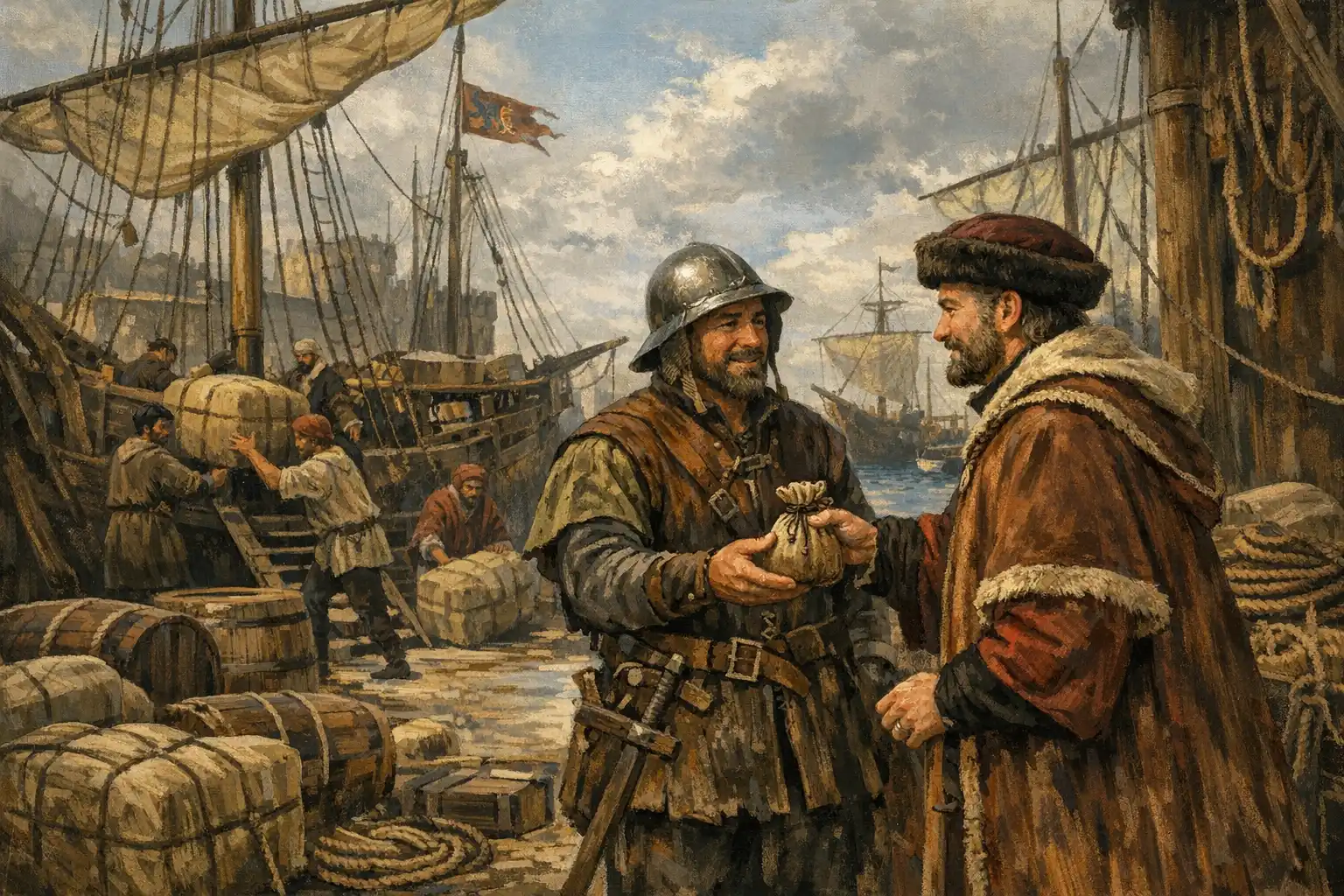
What type of medieval trade partnership is being shown?
Answer
Commenda
Explanation
The scene of a seated backer handing a purse to a traveling merchant fits a contract in which a stay-at-home investor entrusted capital or goods to an agent for a single voyage. The agent conducted the journey and trade, then returned to divide profits by a preset ratio (often about 75/25); losses of capital were borne by the investor unless caused by the agent’s fraud or negligence.
This arrangement flourished in 11th–13th century Mediterranean hubs like Venice and Genoa and was likely influenced by the Islamic qirad/mudaraba. It spread risk and mobilized capital for long-distance trade without forming a permanent firm (unlike a compagnia or societas), making it a cornerstone of the Commercial Revolution—an early step toward limited liability and modern venture finance.