Middle Ages
What institution is most associated with investigating heresy in medieval Europe?
Answer
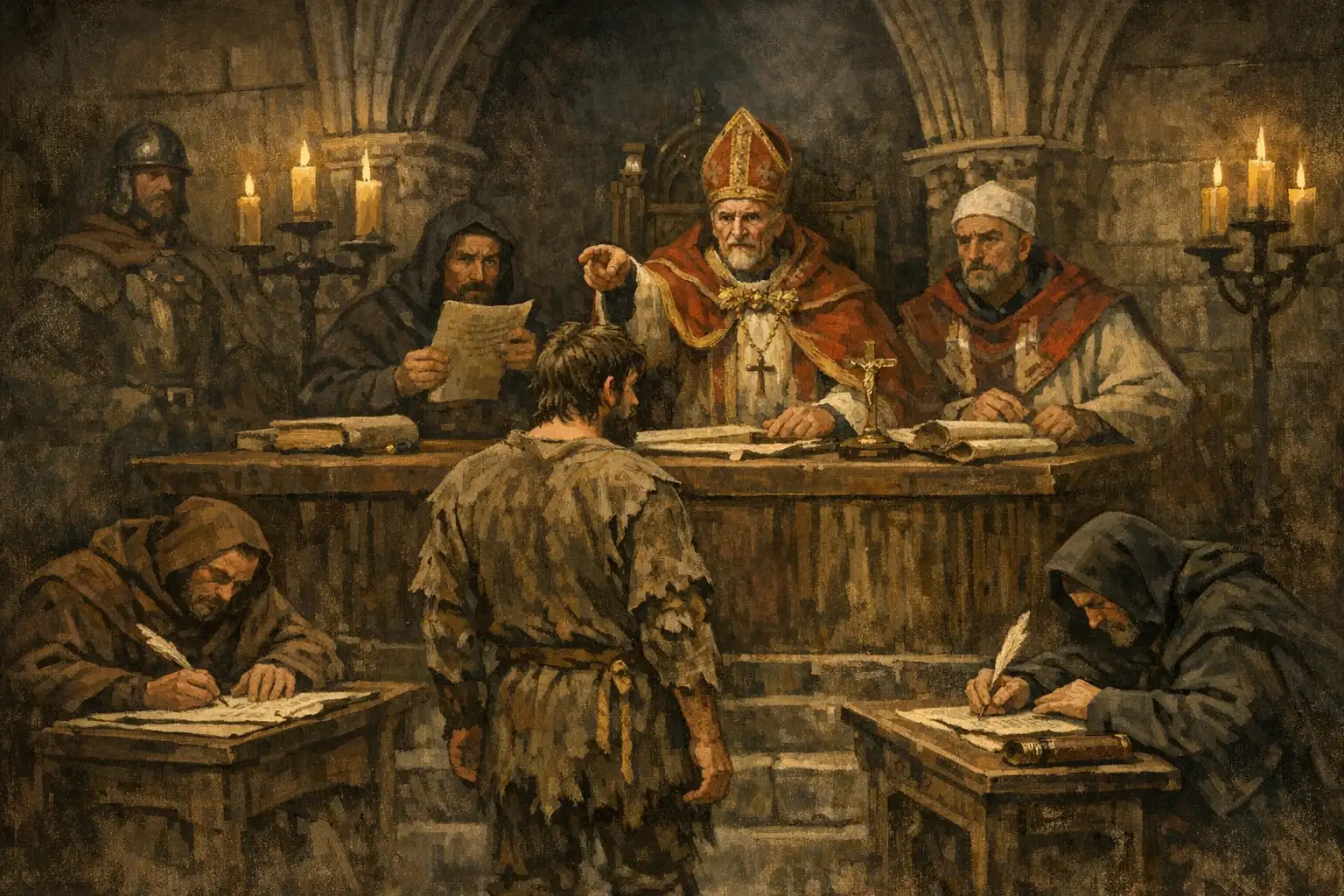
The Inquisition
Explanation
Created in the 13th century by the papacy, specialized tribunals were tasked with detecting and correcting heresy across Europe. Staffed largely by Dominican and Franciscan friars, they used inquisitorial procedure: gathering testimony, examining suspects, seeking confession and repentance, and, if necessary, handing obstinate offenders to secular authorities for punishment. This made them the church’s principal mechanism for heresy investigations, distinct from ordinary church courts.
These tribunals emerged amid concerns over movements like the Cathars and Waldensians after the Albigensian Crusade. The so‑called “Medieval Inquisition” began in the 1230s; later national and papal offshoots (such as the Spanish and Roman versions) built on its model. By contrast, the Papal Court and Roman Curia were administrative centers, and general ecclesiastical courts handled a wide range of canon-law issues rather than systematic heresy probes.