Middle Ages
What trade alliance is most associated with northern European towns and sea commerce?
Answer
Hanseatic League
Explanation
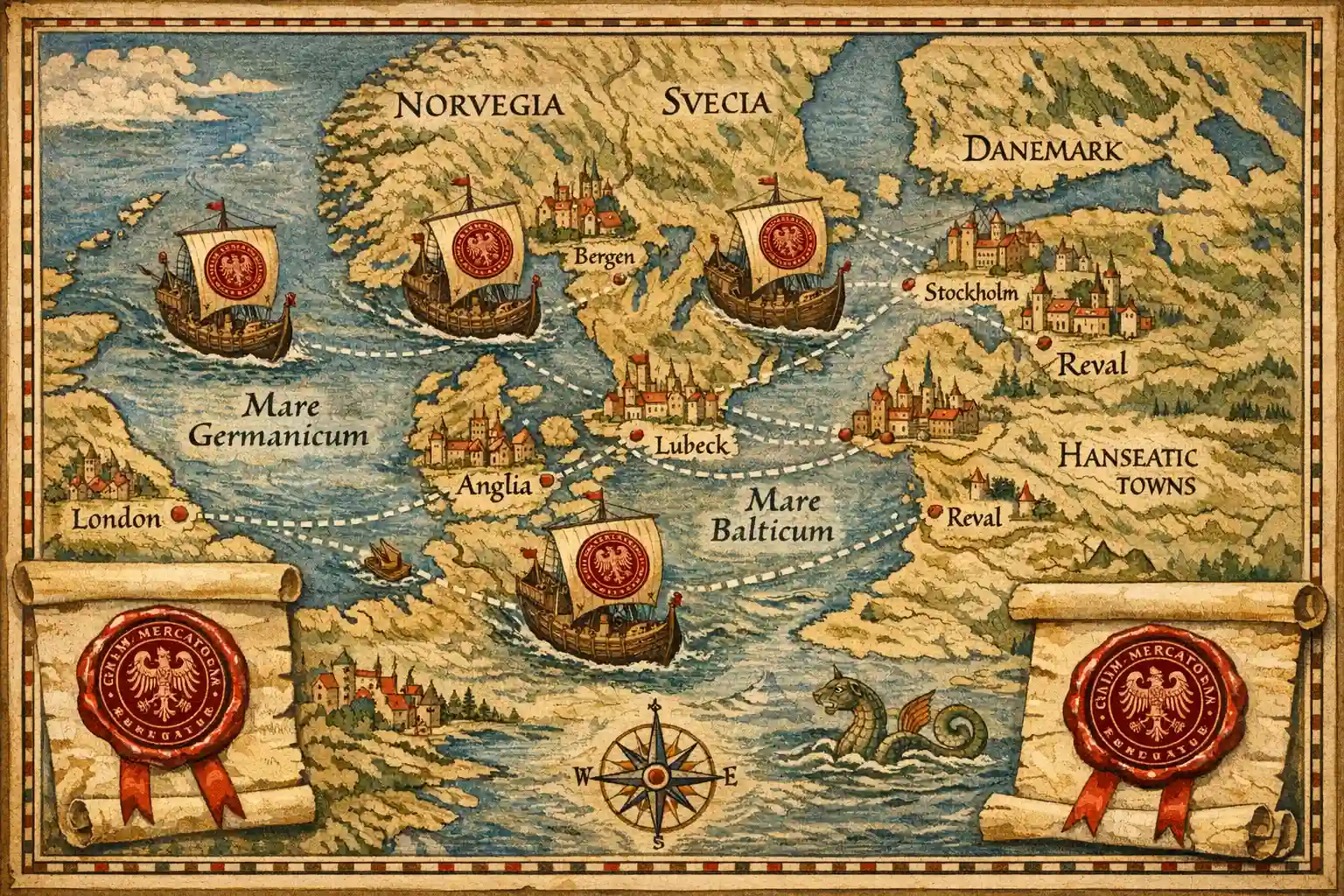
Formed as a federation of merchant towns around the Baltic and North Seas, it coordinated and protected long-distance trade, negotiated privileges, enforced common rules, and organized convoys. From the 13th to 15th centuries it effectively dominated northern European sea commerce, giving member cities like Lübeck, Hamburg, and Bremen decisive influence.
Its trading posts (kontors) in places such as London’s Steelyard, Bruges, Bergen, and Novgorod funneled key goods—grain, timber, furs, wax, and dried fish—across the region. The network’s cog ships and shared maritime law helped standardize business and reduce risk. Though it waned in the 16th century amid rising nation-states and Dutch and English competition, it left a lasting imprint on urban growth and commercial practices.